I’ve Become Supersticious.

If I don’t do this special thing every day something bad will happen.
 
Or, more accurately, when I do this, I’m more likely to have a good day, maybe even some delightful synchronicities.
 
I’m talking about my morning yoga practice.
 
That sounds a little superstitious, right? 
 
It’s been my personal experiment over the course of about 15+ years . . . if I don’t do some kind of morning practice, I’m likely to feel out of sorts for the day. A real cranky pants.


Every morning is a chemistry experiment – my practice moves blood and oxygen around, opens up stagnant corners in my body, clears my mind and fluffs up my energy leaving me sparkly and excited about the day.
 
Are you working on a regular practice?  I encourage all my students to create one. When they do, they come to class saying things like:

My feet are more flexible.
I’m having fewer migraines.
My back pain is gone.
I’m standing up straighter without effort.
That breathing technique is helping me fall asleep! 

If you’d like a little help with a consistent practice, here’s a pro tip: two simple, all-purpose poses are cat/cow  and child’s pose.  Make these the centerpiece of your practice. Go down to the floor, do the cat/cow and child’s pose.  Then as you come up, perhaps you pass through a brief downward dog. Then walk your hands to your feet to a standing forward bend (bend your knees!) and then roll up through the spine (roll through the spine with head dropped, abs engaged). Et Voila, you’re back to standing and ready for the day!

Remember to always listen to your body and never do anything that doesn’t feel right!
 
Give it a try! I love my practice — even a short one can set me up for the day, establishing a pleasant mood and creating a small buffer between me and the chaos of the world. Let me know how it goes!

You can choose.

I went on a meditation retreat a couple of weekends ago and it was great!

On a silent meditation retreat, we can step out of our normal routines and slow way, waaaaay down. We’re invited to sit in stillness and to settle the mind into a quiet state of awareness.
 
This can be quite a process, this stilling. It took me a whole day to settle. The mind is so used to darting here and there, problem-solving, and generally *taking care of business*.

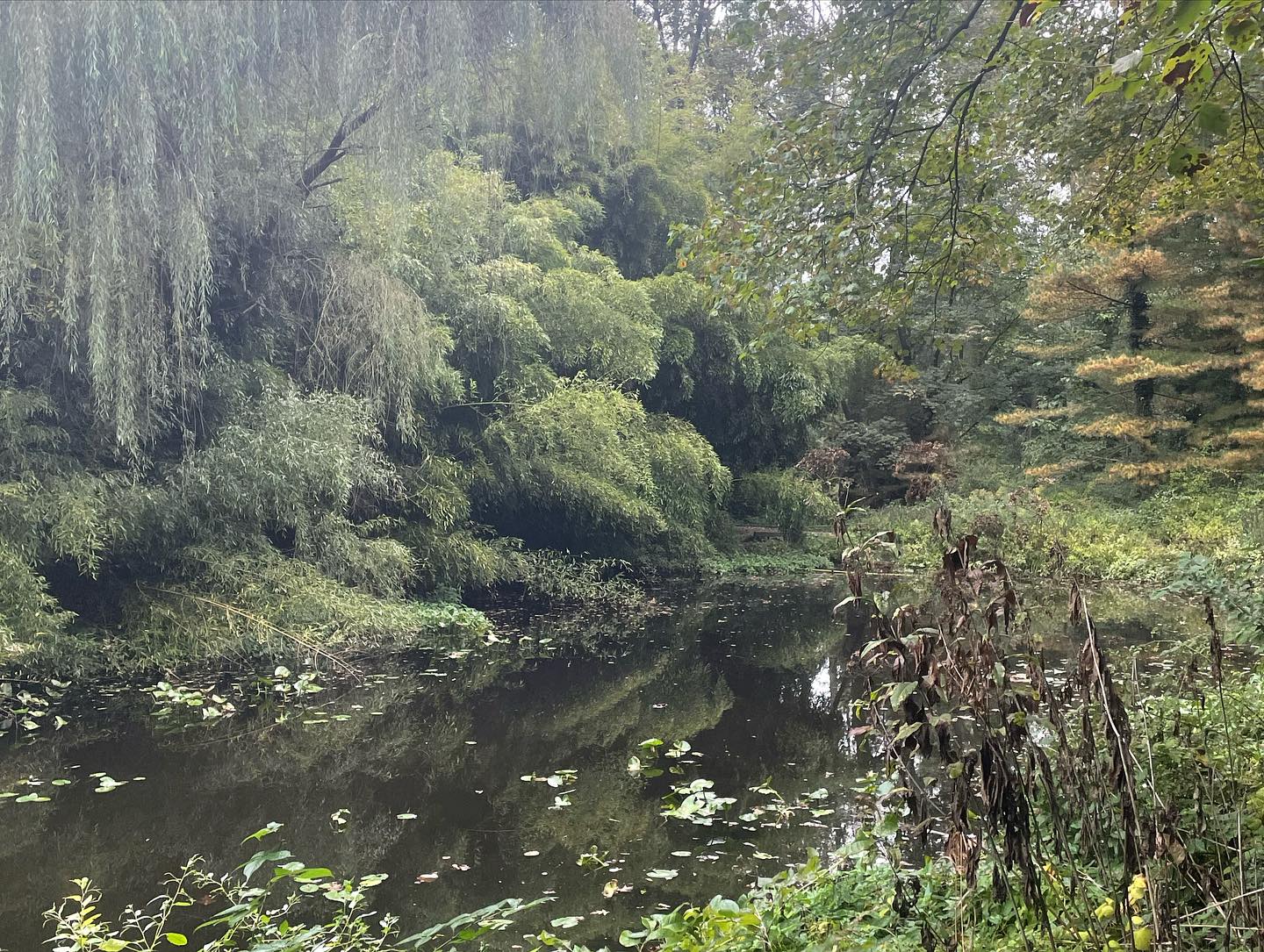
This is the pond that was outside of our meditation studio. I enjoyed some walking mediation around it.

Our retreat leader instructed us to pay close attention to the breath and to silently recite these lines, I know I’m breathing in, I know I’m breathing out
 
These lines helped us develop concentration, which strengthens our ability to stay in the present moment. With this concentration and with plenty of time to relax and do nothing but sit, walk, eat, and sleep, we were able to notice when thoughts were arising and to choose whether to think them or not (we were encouraged not to think them for now).
 
With deeper concentration comes more awareness; awareness of what’s really happening in the present moment – sensations arising, sounds in the
environment . . .
 
I know I’m breathing in. I know I’m breathing out.
 
We can even notice when thoughts and emotions want to arise. And we can choose to allow them in or to say, not right now, and just stay with the breath.
 
I know I’m breathing in. I know I’m breathing out.
 
When we’re drawn into our thoughts and emotions in meditation, our teacher called this entanglement. There’s nothing wrong with it, but when entangled we’re most likely no longer aware of the present moment. We’re entangled in the mind’s busy-ness. This is probably where most of us live.
 
I know I’m breathing in. I know I’m breathing out.
 
When we practice staying with the breath, we can get a little mental vacation and rest in quiet awareness.

Sound appealing? Stick with me . . . next month I’m teaching Beginning Meditation.

Stranger Things

Recently, I was away on vacation with my sweetheart and we were staying at an old inn in Vermont. On our first day there, we settled in, went out for dinner, then came back and decided to start watching the latest season of Stranger Things.

Now this inn was quite old. The floors were tilted and our room’s ceiling was a dormer with old wooden rafters. The room was very small you could feel the age in the building.

And, as circumstances would have it, nobody had been there to greet us at the inn. There was simply a note and key for us on the counter. We had not seen a soul in the building since we arrived.

Also, the inn was next to the town cemetery.

You getting the picture?

As we began watching Stranger Things, midway through the first episode we paused and I turned to my sweetheart and said “is this really a good idea … to be watching this right here, right now?”

Did I mention that there was a cemetery right next to us?

And we’re seemingly the only people in this really old inn?

We proceeded to watch two episodes. If you haven’t seen Stranger Things, while I don’t normally go in for horror shows, this one is quite wonderful and intriguing and not the gore and terror of usual horror flicks. I like it.

Nonetheless, as we finished and settled in for sleep, I found myself replaying scenes of monsters and beasts and all the scary bits of the show.

Did I mention that we were right next to a really old cemetery? 

So I had to use my Jedi mind tricks (otherwise known as meditation techniques). I had to pause and recognize that this was my mind still busily engaged with the show. I focused on feeling my breath and counting breath cycles. When my mind wandered back into the scenes of haunted houses and demented beings, I would simply label all that as “thinking” and bring my attention back to my breath and the counting.

Instead of thinking about the cemetery I thought about the trees outside my window. I thought about the crescent moon in the clear night sky and listened to the sound of crickets. These are very normal sounds and signs of the earth.

The peaceful earth.

Sensing nature and connecting to my breath cycles helped lull me to sleep and I slept just fine through the night. 

I am really grateful for my Jedi mind tricks. I’d be happy to teach them to you in my Beginning Meditation course.

Stressed Out?

I’ve been moving – as in, I moved my home – so I’ve been a bit of a stress monkey (yes, me, the yoga therapist­­—I get stressed too).
 
What does a yoga therapist do with stress?

Here are a few of my coping strategies:

  • I keep my meditation practice going, even inserting a few extra moments here and there, especially when the going gets intense
  • I nap. Even if I don’t fall asleep. It’s like meditation in a comfy position
  • I remind myself that this period will pass and to give myself and others compassion and lovingkindness as often as possible.
  • Baths. Even short, shallow baths . . .  it’s a moment to just be quiet and still
  • I focus on my breath when the going gets tough, especially the exhalations (slightly elongating those).

Even when the stress gets kicked up a few more notches . . .  my boyfriend (who I moved in with) injured his knee. Bad. Like, surgery bad.
 
So I’m doing lots of conscious breathing as I cart trays of food up and down the stairs, around all the boxes, and over the complaining cat (this move is stressful for him too).
 
I hope you’re having a less stressful time. But if you are feeling challenged, try something from the list. I hope it helps!

Just Like Trees

Did you know that trees talk to each other?

Tree roots in a forest are connected in an underground network. Not only can trees share water and nutrients, but they can communicate with each other about drought, disease, or insect attacks. Amazing!

They’re a family. A social network. They take care of each other.

Like trees, us humans are connected in social networks – families, friends, colleagues, acquaintances. We care for each other. We laugh and cry together. And we help each other heal.

Yes, we help each other heal. When you’re on a healing journey and others support you, that support is part of your healing process. Researcher Kelly Turner, PhD, studied over a thousand cancer patients who defied “statistically unlikely” prognoses (i.e., their outcome was not looking good). She found 9 commonalities among these outliers, one of which is social connection.

“When we feel loved and cared for by others, the rush of healing hormones released by the master glands in our brains affects our bodies in such a way that our immune systems suddenly have renewed energy to repair cells, clear out toxins, and most important, remove cancer cells.”

Radical Remission, Kelly A. Turner, PhD.

Just like trees, we need to play our part in the eco system. Sometimes that means receiving love and care, not always just giving it (this means you too, caregivers!).

If you’re someone who tends to go it alone, who always refuses support from others, I strongly encourage you to accept the offers. Accept the lasagna casserole from your neighbor. Accept the massage from your partner, the friend doing some chores for you or walking your dog; accept these things so you can rest.

And then notice how you feel when you’re well supported. Notice if you have feelings of love and support (that’s the happy hormone oxytocin). And by the way, your neighbor gets a dose of happy hormones too­–it’s a win/win!

Trust in the interconnectedness of everything. We’re all enmeshed in an interconnected fabric of health and well-being. In this fabric, sometimes you’re the giver of care and support and sometimes you’re the receiver. Most of us have a preference for one role or the other. See if you can practice both.

Trust in the interconnectedness of all things.

Photo by Jeremy Bishop on Unsplash

Have you heard?

Have you heard the birds?

It’s spring migration time for most birds and also mating time (hey baby!).

Listen to them! Science tells us that birdsong can reduces stress, promote positivity, and improve our observational skills. It can also be good for our productivity. Who knew?

My sound therapist friend, Michael Reiley, shared this excerpt with me:

“Human ears are built to hear birdsong . . . our bodies evolved not for party conversation but rather to harvest sounds from wild creatures . . . the aural signals on which our species’ success depended.

Kathleen Dean MooreEarth’s Wild Music: Celebrating and Defending the Songs of the Natural World

Birds sing when they feel safe. In turn, birdsong sends a primal message to our nervous systems that we are safe. 

So open those windows! Or go on a nature walk. Listen to the birds and tune into the nature frequency. See if you sense a settling, a relaxing, a softening. This is your nervous system in action, downshifting to the parasympathetic zone (the calm part of your autonomic nervous system). This downshifting is a dialogue between your mind and body, essentially saying, all is well, I’m safe, I can chill out.

So chill out with the birds!

Happy Spring,
Michelle

It’s Mindful March!


What would a mindful month look like for you?
 
Maybe you practice washing dishes without thinking about anything, just feeling warm soapy water and the shape of the bowl.
 
Maybe you listen to your partner with your whole body, not thinking a bunch of thoughts about what they’re saying. Just listening completely, being fully present.

Photo by Jessica Johnston on Unsplash

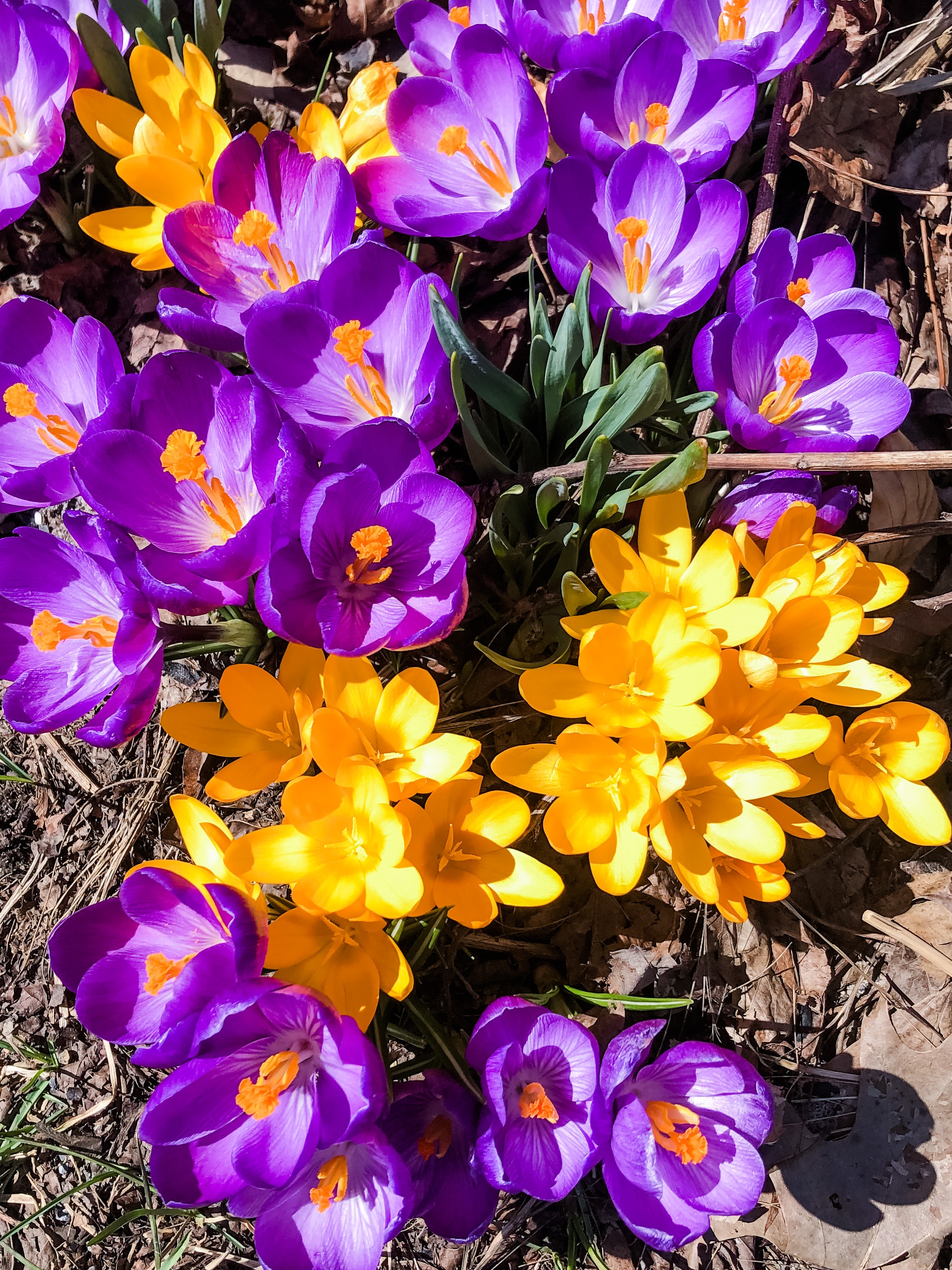
Maybe it’s pausing to look at the crocus that’s coming up, noticing the purple color and the bees buzzing around them. Or maybe just feeling the warm spring sun on your face and body.
 
Maybe it’s intentionally stopping at some point in each day, perhaps sitting with a cup of tea, without any agenda – no thinking, no planning, no doing (radical, right?). Just noticing what you’re seeing and hearing and tasting – feeling the shape of the couch or chair. Noticing the textures on your skin and feet. Just mindful of the exact nature of this moment. There will never be another one exactly like this one – EVER.
 
What would it be like to practice not-thinking? Are you wondering what that even is?
 
Think of a thought as an event. It has a beginning, middle and end, unless it generates another thought and you’re swept up into that. When the thought is over, you’re in awareness. In awareness, you have sensory information: what you’re seeing, hearing, tasting, smelling, feeling on your skin, and sensing internally, like your breath.
 
What would it be like to spend a little more time in awareness and a little less time thinking?

This, in essence, is mindfulness. I hope you’ll try it.

How NOT to give the Stink Eye

Here’s a story for ya . . .
 
I was starting to write a little something for my newsletter – a piece about heart practices for Heart Month. It was about how practicing attitudes like kindness, gratitude, joy, compassion, etc., is good for your overall health and especially your heart health.
 
I put the writing on the back burner to take a weekend trip to Florida for a family visit. It was a lovely visit, but on the day I was supposed to return, Sunday, my flight was cancelled. Hmpfh.
 
Okay, so I booked the next best flight home which was Monday. Unfortunately, it meant cancelling all of my Monday classes. ‘Not happy about that.
 
Monday comes. Flight is significantly delayed. Wow, this is a fun game (not). I get to the airport at the appointed time. The board says, Flight Cancelled.
 
I’m hot under the collar now (that’s putting it politely). So, I go stand in line at the airline’s ticketing counter. It’s a long line – at least 20 parties in front of me. The wait is about 40 minutes long. Grrr.
 
Here’s where the point of the story comes in – what to do I do with this anger and frustration?
 
One of the heart practices is equanimity. Now, equanimity does not mean passivity. Quite the contrary. I’m very actively breathing and managing the story-making in my mind. I’m actively working on staying calm and not blaming. I’m breathing.
 
Think of equanimity as a kind of active boundary holding. If you work at cultivating peace and kindness in your internal world, how do you hold onto it in challenging circumstances? How do you not react with word-daggers or stink eye?
 
Breathe intentionally.
Be mindful of the mind’s story-making tendency.
Stay away from the blame game (not helpful).
Assume that each person you’re engaging with is doing their best (and perhaps even send them some kindness).
 
Finally, it’s my turn to talk to an agent. She looks very, very tired as she recites the same story she’s been telling everyone: all flights with this airline are cancelled. Nationwide their computer system is down, she says. Next shot at a flight is Wednesday. DOUBLE HMPFH!
 
Well that’s not happening.
 
I got a refund, jumped on another airline, got home very late that night. End of story.
 
The point is that heart practices are about how you relate to yourself and others. For any given situation there is a heart practice: kindness, compassion, joy, equanimity.
 
And bonus – they all have positive physiological effects on the body like lowering blood pressure (very helpful in this story), improving heart rate variability and reducing stress hormones.

Practicing on regular basis helps you use these tools in a crisis. It may still be challenging to be mindful and kind in a tough situation, but it gets easier with practice.
 
Try out these heart practices this month – just see what dropping a little kindness into any given moment does for you.

Your Cousins

Every breath you take comes from a tree (sorry if I just planted an earworm in your head).

Think about that.
It’s easy to forget, isn’t it? 

Every breath you take is oxygen that was released from a tree.

We have a symbiotic relationship with trees. Our every exhale is an offering to them. It’s like a constant gift exchange! 

It’s easy to forget that our bodies are of the earth!

It’s easy to forget that the calcium in our bones is the same calcium that’s found in rocks, shells and minerals. That the water in our blood, lymph, tears, and saliva is a cousin to the water in the ocean, rivers and rain. The electricity that runs through your nerves to tell your muscles to move is related to the lighting you saw in last week’s thunderstorm. The air that turned into a mighty wind in that storm–that air that’s all around you right now–is the stuff that trees are giving out all the time . . . and that you are taking into your lungs in this breath right here.
 
And this one.
And this one.
 
When I pause to remember how interdependent I am with all the elements of this planet, I quickly fall into awe and gratitude. What a complex system! And we’re just a little piece of it.
 
Since this is the month of gratitude, Thanksgiving, I’ll intentionally pause a little more often just to tune into this interconnectivity. Will you join me? I’d love to hear your thoughts (shoot me an email!).
 
In gratitude,
Michelle

Photo Credit: Victoria Palacios on Unsplash

This won’t happen quite like this ever again.

Noticing.
Paying attention.

Are you noticing . . . the trees changing, their color show just beginning. The birds are migrating and doing funny bird things. I’ve seen squirrels outside my window performing crazy acrobatics to get the farthest berry on the limb. The light’s becoming more golden, the sun lower in the sky, blinding me now as I drive around that certain curve at 5:00. Days are shorter and will get shorter still. The air cooler, crisper.
 
When you notice this earth-dance into autumn, do you pause and take it in? This moment in the change of seasons, and in your personal change of seasons, won’t ever happen quite like this again. This moment is unique. Even a brief pause to take it in, to tune into your senses, can help your body and nervous system relax. It doesn’t have to take a long time, maybe the duration of one full breath. Just drop your thoughts for a moment . . . and notice.
 
Enjoy the season,
Michelle