In her book Wintering, Katherine May writes about the transformative power of rest and retreat during difficult times. I love the idea of “hibernating” in a cozy little nest. It’s about being quiet and still, letting the mind soften, drift, and dream. To me, this feels like the ultimate antidote to the chaos of our modern world.
Winter is a natural period of dormancy. In Traditional Chinese Medicine, it’s the season to restore our vital energy. Because water is the element of the season, we instinctively turn toward the warmth of teas, soups, and long baths.
However, I work with many women who find it incredibly difficult to pause. For many of us, rest feels “unsafe” or “wrong.” We carry a deep-seated belief that if we aren’t constantly “doing,” we’re being lazy.
But I’m not suggesting you ditch your responsibilities or stop moving your body. I’m saying: Value yourself enough to let yourself be still. In that stillness, something else emerges—your deeper inner voice, your intuition, your “gut.” Being still helps us get underneath the “chattery mind”—the one constantly screaming at you to get more sh*t done (pardon my French)! Most importantly, physical and mental stillness is how we regulate a nervous system that might be stuck in a permanent state of “fight or flight.”
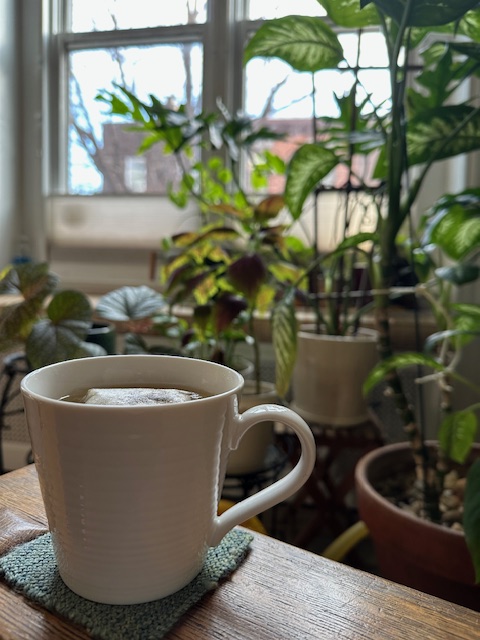
Try an experiment today: Make a cup of tea and sit by a window. Don’t plan, don’t ruminate, and don’t check your phone. Just sit. Notice the sights, the sounds, and the warmth of the mug. Really taste the tea. Feel your body in the chair and the rhythm of your breath.
Is your inner voice going ballistic? If so, gently reassure it that you’ll be fine. Everything will get done. You’re worth slowing down for.
Let yourself be nourished by stillness. You aren’t “doing nothing”—you’re wintering.
If I could wave a magic wand and grant every newly diagnosed person one essential skill, it would be this: the power to intentionally shift out of stress.
To do that, you need to understand your body’s control center: the Autonomic Nervous System (ANS).
💡 Here’s the essential takeaway: Stress is Sympathetic. Peace is Parasympathetic.
Think of the Autonomic Nervous System as a car. The Sympathetic system (Stress) is the Gas Pedal: it’s necessary for emergencies, but constant acceleration will burn out the engine. It’s high-revving, fast, and demanding.
The Parasympathetic system (Peace) is the Brake Pedal/Cruise Control: it slows things down, allows for smooth operation, conserves fuel, and lets the body rest. You need to use the brake to come to a full stop and enjoy the peace.
Constant worry about appointments, treatments, and prognosis keeps your body stuck in that ‘fight or flight’ (sympathetic nervous system) mode.
This survival response is useful in an emergency, but it tragically diverts energy away from the vital processes your body needs most right now – healing, digestion, and restorative sleep (the parasympathetic nervous system).
Learning how to intentionally activate your parasympathetic nervous system (PNS) isn’t just a coping mechanism—it’s one of the most important skills you can master for your entire cancer journey.
The PNS is the body’s “healing headquarters.” When you activate it (the peace), you are literally telling your body, “It is safe to repair.” Let this be your motivation for practicing relaxation!
In a time of profound stress, like a cancer diagnosis, your sympathetic nervous system is naturally in overdrive. That’s why we need to intentionally give your body a break and shift gears into peace.
Here are some Parasympathetic techniques that can be done anywhere: in a waiting room, during a sleepless night, or before a scan.
Vagal Nerve Stimulators: The vagus nerve is the main line of the PNS. Here are simple ways to stimulate it.
Longer Exhales: simply making the exhale longer than the inhalestimulates the vagus nerve. Or try4-7-8 breathing.
Humming or Singing: The vibrations in the throat stimulate the vagus nerve. Try humming a favorite song or even just one long note. Do that several times and notice how that feels.
Gentle Movement: slow, deliberate movement, like slow-motion stretching or tai chi/qi gong, can be very calming.
Sensory Anchors: do these simple things to ground yourself and cue your brain to calm down:
Use a specific calming scent (e.g., lavender on a wrist).
Try a weighted blanket or a soft, comforting object (a “peace object”).
Quality time with your pet can trigger the relaxation response.
This is a skill, not a one-time fix. Just like you take medicine daily, you’ll need to practice activating peace daily.
Remember, the power to shift into parasympathetic isn’t out there (in the doctor’s hands or the prognosis); the power to initiate peace is inside you.
Almost every cancer patient I’ve ever worked with talks about scanxiety—that intense anxiety that arises when they have an upcoming medical test, be it a CT scan, MRI, or ultrasound.
It’s completely normal to feel this fear. After everything you’ve been through, it makes sense that you’d feel triggered and reluctant to face another potential hurdle.
The good news is that you don’t have to be swept away by this fear. Here are five simple, yet powerful, tools I offer my clients to help them manage scanxiety and cultivate peace during this challenging time.
1. Develop the Witness
Your first task is to step back and see the bigger picture.
Most people try to push uncomfortable feelings away, but what if you simply saw your anxiety and fear as perfectly normal? You’ve been through a lot; it’s a perfectly human emotion given the circumstances.
I call this process developing the witness. It means stepping back to observe the feeling without judgment. You are not the fear; you are the one noticing the fear. See the anxiety as a perfectly understandable reaction to a traumatic situation. This simple act of acknowledgment creates space between you and the emotion.
2. Bring in Compassion
Now, bring in some tenderness.
This entire experience is terribly difficult. Be gentle with yourself. Acknowledge this suffering and allow yourself to feel the natural trembling or quivering of your heart with compassion.
Befriend the part of yourself that is scared. You wouldn’t yell at a frightened friend; treat yourself with the same level of kindness and care. Let your own suffering be a call to be more friendly and tender toward yourself.
3. Reframe Fear as a Messenger
Can you see fear as a friend who’s trying to help you?
At its core, fear’s job is to prompt you to take action and be prepared for a future threat. The issue is that it doesn’t know when to stop nudging you.
If you’ve already taken all the necessary actions—and you almost certainly have—you can acknowledge the fear and kindly ask it to take a break. Say to it, “Thank you for the warning. I’ve done everything I can for now. I need you to go sit in the corner.” Acknowledge its effort, then firmly reclaim your peace.
4. Activate Your Parasympathetic Nervous System
This is where you use your self-care tools to intentionally cultivate peace.
Your anxiety is fueled by the stress hormone cortisol. By finding enjoyable, calming activities, you can switch on your Parasympathetic Nervous System—your body’s “rest and digest” mode—and release those happy, calming hormones instead.
Go for a walk in the woods.
Take a bath.
Journal your thoughts.
Call a friend to vent (they don’t need to “fix” anything, just listen).
Do nice things for yourself.
Take this peace seriously. It’s not a luxury; it’s supporting your immune system by warding off the damaging effects of chronic cortisol.
5. Redirect Your Attention to the Present
Fear will always try to creep back in. Keep acknowledging it and naming it without judgment. Sending it “back to the corner” (as in Tool 3) is only one part of the action.
The other part is immediately redirecting your attention to the present moment.
What is in front of you right now?
What are you doing?
Focus on the sensory experience of that action. The smell of your coffee, the feel of the towel after a shower, the sound of music.
Stay present with the physical sensations of this moment. You can’t be worried about the future if you’re fully engaged in the now.
With enough practice, you’ll begin to see this process as a whole cycle, and scanxiety will have less power over you. You can use these five steps for other things too, like important deadlines or even exciting upcoming events. The energy of anxiety and excitement is the same stress response in your body—and you can learn to work with it, feel it, and move beyond it.
I hope you’re able to embrace the joyous expansiveness of summer – to be big and bright like the sun.
Part of my own joyous expansiveness lately has truly been centered on gratitude. I’m incredibly grateful for so many things – from the stability of my home to the unwavering support of my wonderful tribe of friends, the nourishment of healthy, fresh food, and the profound privilege of doing the work that I do alongside all of you.
There’s a wealth of compelling research surrounding gratitude, and what’s particularly fascinating to me, especially from a yoga therapy perspective, is how gratitude is not just a thought, but a feeling within the body. It’s often experienced as an expansive sensation, frequently in the heart area, and words only serve to guide us toward that deeper, embodied sensation. We genuinely want to feel gratitude more than simply think it.
The scientific community has extensively studied the profound benefits of cultivating gratitude. For cancer survivors, these findings are particularly resonant:
Enhanced Mental & Emotional Well-being: Research consistently shows that practicing gratitude can significantly increase feelings of happiness, optimism, and life satisfaction, while also helping to reduce symptoms of stress, anxiety, and depression. A landmark study by Emmons and McCullough (2003) demonstrated that individuals who regularly listed things they were grateful for reported higher levels of positive emotions and greater overall well-being.
Increased Resilience: You’ve already navigated immense challenges with incredible strength. Gratitude can further bolster this inherent resilience, helping you to cope with adversity and cultivate a more positive outlook even amidst life’s difficulties (Rash & Bono, 2019).
Improved Physical Health: Beyond the mind, gratitude has tangible benefits for the body. Studies suggest it can contribute to better sleep quality and may even support a healthier immune system (Digdon & Koble, 2011; Mills et al., 2015).
Stronger Social Connections: Gratitude fosters deeper, more meaningful bonds with others, encouraging prosocial behaviors and reinforcing feelings of support and community – which are incredibly vital during and after cancer treatment (Algoe et al., 2010).
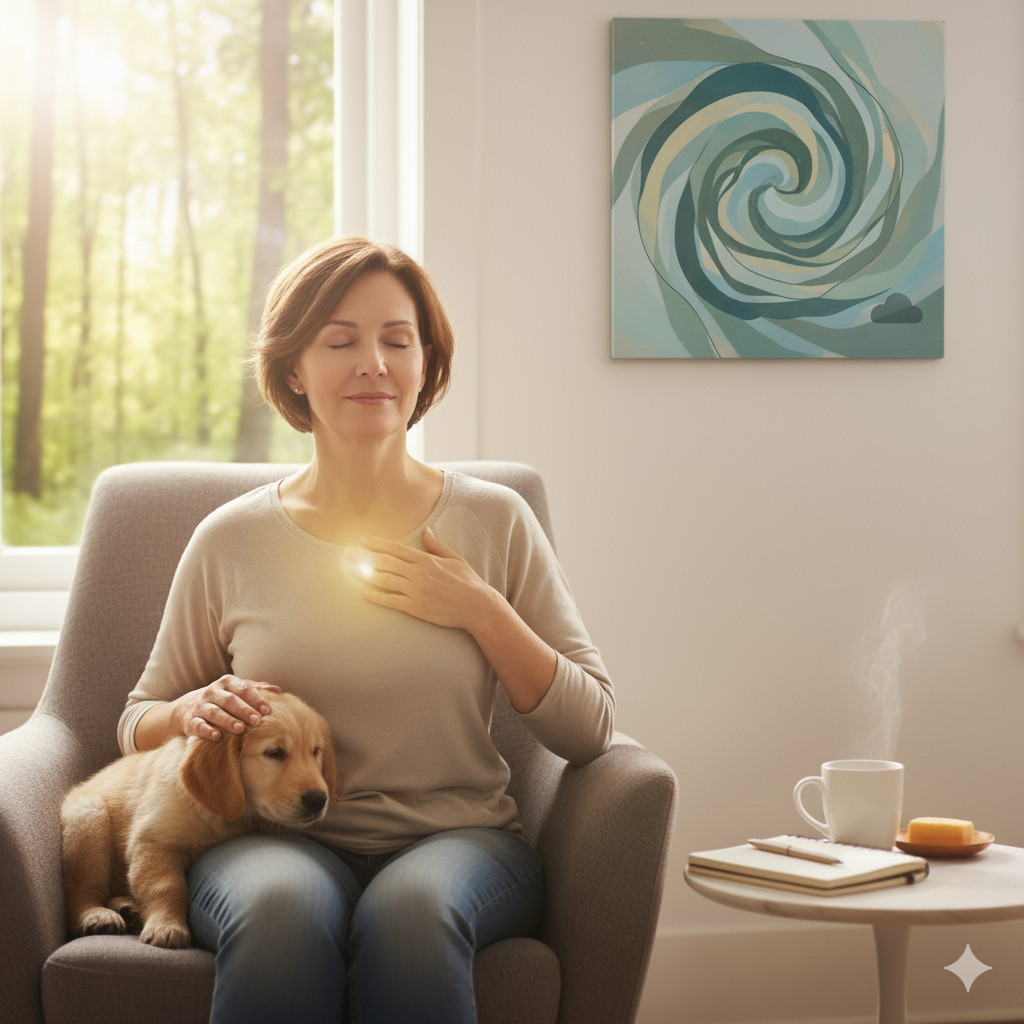
If you’d like to experience this embodied gratitude for yourself, try this simple practice: Just close your eyes and bring to mind something you’re grateful for – it can be something small and simple, like the warmth of your morning coffee, or something big and profound, like a loving relationship. Allow yourself to relax into this practice; invite your analytical mind to take a backseat for a moment. As you continue to contemplate these objects of your gratitude, gently sense your heart space, deep inside your rib cage. Is there a pleasant, expansive, or warm feeling there? It might be quite subtle. Stay with it for a moment, just breathing and feeling.
May your summer be filled with moments of peace, joy, and profound gratitude.
References:
Algoe, S. B., Gable, S. L., & Maisel, N. C. (2010). It’s the little things: Everyday gratitude as a booster shot for romantic relationships. Personal Relationships, 17(2), 217–232.
Digdon, N. L., & Koble, E. (2011). Effects of gratitude journaling on sleep quality in military veterans with posttraumatic stress disorder. Applied Psychology: Health and Well-Being, 3(2), 173–191.
Emmons, R. A., & McCullough, M. E. (2003). Counting blessings versus burdens: An experimental investigation of gratitude and subjective well-being in daily life. Journal of Personality and Social Psychology, 84(2), 377–389.
Mills, P. J., Redwine, L., Wilson, K., Pung, M. A., Chinh, K., Greenberg, B. H., … & Chopra, D. (2015). The role of gratitude in spiritual well-being in asymptomatic heart failure patients. Spirituality in Clinical Practice, 2(1), 5–17.
Rash, J. A., & Bono, G. (2019). Gratitude and well-being: The benefits of appreciation. In C. A. Stebbins (Ed.), The Wiley encyclopedia of personality and individual differences: Vol. IV. Clinical, educational, and industrial/organizational psychology (pp. 219-224). John Wiley & Sons.
I hope this finds you well and happy. It’s a lovely spring day here in Philadelphia. I find myself in a sweetly contented place and am sending these pleasant vibes your way.
Wherever you are, I hope you’re delighting in the pop of spring flowers, the budding and blooming of the trees. If for some reason you’re struggling today, I hope you can take strength from spring’s vibrancy. It mirrors our own capacity for renewal and resilience, even amidst challenges.
Whether you’re in a quiet healing state or feeling your own spring surge of energy, it’s all valid. There’s strength in both rest and action, in moments of joy and in the quiet internal storms of difficulties. May you be fully present to it all, able to see the constant ebb and flow of life – we move inward, then outward. We’re forever expanding and contracting. Cycling, like the breath, in and out. The eternal dance of yin and yang.
Wherever you are in the dance, I hope you can appreciate joy when in arises, peace when it surrounds you and deep stillness when it settles in you.
Did my last email inspire you to open a door for somebody? I hope so.
I’m still on the kindness train . . .
Kindness, compassion and empathy all together, are a kind of glue that hold our communities together and help them grow strong. These qualities lead to better cooperation and, it turns out, are what our species needs for survival.
Charles Darwin’s theory of survival of the fittest is commonly understood to mean that the strongest of a species will survive and thus pass along their strong genes. Culturally, we often think of strength as power over others and that to be successful means to be competitive.
I recently learned that the phrase, survival of the fittest (which Darwin didn’t actually coin), was a misrepresentation of Darwin’s work. Darwin would more likely say survival of the kindest is how we endure. He believed that cooperation, altruism, sympathy/empathy and compassion better help a species survive.
When we practice kindness it strengthens our bonds with the people around us. When a community is well connected, caring about all its members, it’s easier to organize and cooperate in the interest of bettering its circumstances – in effect, to survive and thrive.
All of this gets wrapped up into our simple practice of kindness. Cultivating kindness as a habit not only supports our health and well-being but strengthens our whole community.
Have you held the door open for anyone lately? It could be good for your health!
Let me explain . . . for the past couple of years, I’ve had a pet topic – the heart, and by heart, I mean emotional well-being.
My curiosity is about the science behind positive emotions and how they can affect our health.
Digging into the research, I learned that there are huge health benefits to positive emotions such as kindness.
Kindness generates the hormone oxytocin, sometimes known as the cuddle hormone, which in turn does so many things, such as:
generating nitrate oxide which lowers blood pressure
acting as an antioxidant, cleaning the blood vessels of free radicals
reducing inflammation – such a concern for those dealing with cancer
increasing immune function – always good
We can generate this oxytocin with a 6 second hug, quality time with our pets, or an act of kindness, like opening the door for someone. It’s important to actually feel the pleasantness of kindness in the body – that’s when you know oxytocin is flowing.
Have you ever had one of those surprisingly delightful moments that stops you in your tracks? I had one recently . . .
I was on a nature walk through a meadow this past weekend – it was a glorious autumn day here in eastern Pennsylvania. I paused to watch a tiny finch pick at a seed pod. He was very busy. But then he noticed me and froze. And I froze. We were both frozen. Who will move first? Oh, the suspense!
I’m standing still as a statue but inside I’m all bubbly with joy! This whole thing delights me to no end. I’m not moving but I’m feeling completely present and alive and tuned into this creature. Who will win this statue battle?
He flies away and I exhale. Farewell, friend!
I keep walking, thinking about the encounter and how it energized my body. What a contrast to the busy mind state I’m usually lost in. This is normal for us humans, this busy mind. We’re constantly problem solving to improve our conditions, trying to make our lives better.
But this busy problem-solving mind seems to not have an “OFF” button. It gets so wrapped up in problems that we can’t stop and just be in the present moment. And without an OFF button, many of us can’t sleep. Where’s the OFF button?
We hit the OFF button when we come to our senses. When we drop into the present moment and pay attention to what we see, hear, smell, taste, touch and what we notice in our bodies, like the breath.
The next time you’re plagued by the busy mind and need a break, lose your mind and come to your senses. Take a generous breath with a long exhale – notice how that feels. Then look around you. Is there some simple bit of beauty nearby? Maybe the way the light lands on the tree outside your window? Or the still life of objects on the table? What sounds are happening around you that you’ve tuned out? Do you have a beverage to sip on? Pay close attention to that taste.
Linger in your sensory break. Before long, your busy mind will probably crack the whip and tell you to get back to it. No worries. You can hit the OFF button any time you like.
Lately, I’ve been thinking about the yoga mat as a magic carpet.
I know that sounds funny but stick with me.
Not a magic carpet that literally flies away, but a magic carpet that helps you create a ritual that can become magical.
In this ritual, you roll out your mat and enter the container. In this container you sink deeply into the present moment and pay attention to what’s really here: what’s your body begging for? What’s the song of your heart? How’s the mind musing today? Where’s your energy, your spirit?
And so, you attend to these calls. You give your body that certain opening; you take those long cleansing breaths; you slide into a mind-quieting meditation.
This ritual helps you drop your habitual way of being in the world–it’s a break from responsibilities and a time for tuning in to the deep inner self. What does it really want? Listen for an honest answer.
All these practices are alchemical. They soothe the jangled nervous system and sweep away stress hormones. They shake off stagnation and fatigue which hide out in the fascia (connective tissue). They open forgotten corners in the body like those little hidden pockets in the hips. They freshen the lungs, bathe the brain, nourish cells, and rouse the blood and lymph.
Over time these practices can create deep change and healing. They can carry you, via that magic carpet, toward the finest version of yourself.
If you don’t already have a regular yoga practice, consider creating one so that you can offer your body, mind, and heart the salves they need. If you want a little support with that, consider setting up a private session with me or come to one of my classes to pick up some pointers.
Things have been heavy for me lately, not gonna lie. My mom passed in December. Grief is thick for me right now, but there’s more going on . . .
There’s a kind of spiritual maturation that happens as a result of living through a crisis. We sometimes call these life chapters the dark nights of the soul. Circumstances bring us into difficulties, dark times, crisis.
But this is when we go through our richest growth periods. We develop insights, we see strengths we never knew we had. Hidden parts of us come forward. We behave differently than we normally would because we’re under stress. The stress doesn’t feel good, but once we’re on the other side of it we might see that we gained strength and skill.
It’s helpful to stay conscious and aware of everything that we’re experiencing. Even joy can happen in the midst of crisis. If you are in one of these chapters, keep “knowing” all that you are experiencing. Even the painful things. This is life. And this is how we develop compassion. Rest in deep compassion for yourself for how difficult this is. All things change… so know that this too shall pass.
I’m trying my best to stay in this knowing and compassion. It’s a practice and a process.





 Michelle Stortz